Trading and investing
Understand what the trading is and how the result of the agreement occurs.
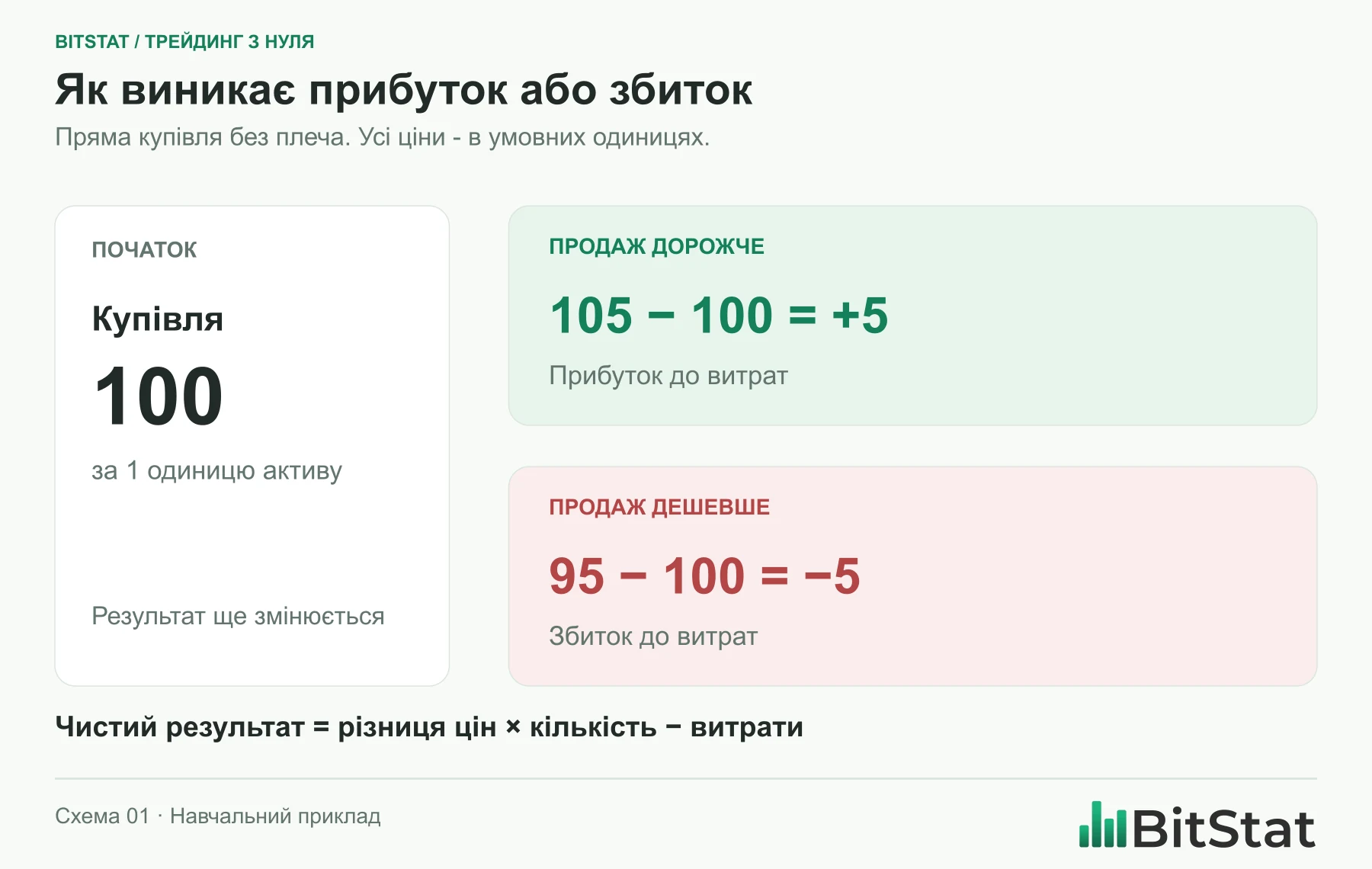
Trading is the purchase and sale of financial instruments with a calculation on the change of their price. For example, a person purchases one unit of an asset for 100 conditional units and later sells for 105. The difference is +5 to expenses. If it sells for 95 - the result −5 to expenditures.
Activity What is worth and what can be owned: for example, the company’s share. Financial Instrument - a broader concept: it can be both the asset itself and the contract related to its price. Buying shares and opening future position - different transactions with different rules.
Trading and Investment
Investment is often linked to long-term possession of assets and their economic value. In trading more attention is paid to the conditions of entry, output and price movement. There is no clear timeline between them. In both cases possible losses.
The green number in application does not necessarily mean the fixed profit. As long as the position is open, its current result changes along with the price. After closing you need to consider the cost of the deal.
Practice
You bought 2 units of the asset by 50 and sold by 53. General purchasing and sales commissions are 1. What is the net result?
Check the answer
Result to expenses: (53 − 50) × 2 = 6. After commissions: 6 − 1 = 5 Unity of Profit.
Remember the Yat: The price, quantity and expenses together determine the result. The most correct assumption of the direction of movement is not enough.